

Opsbook compresses the operational overhead of resilience programs while expanding the surface they cover.
Exercise the full cross-functional response on a predictable cadence. Validate plans, identify gaps, and close them before they show up in production.
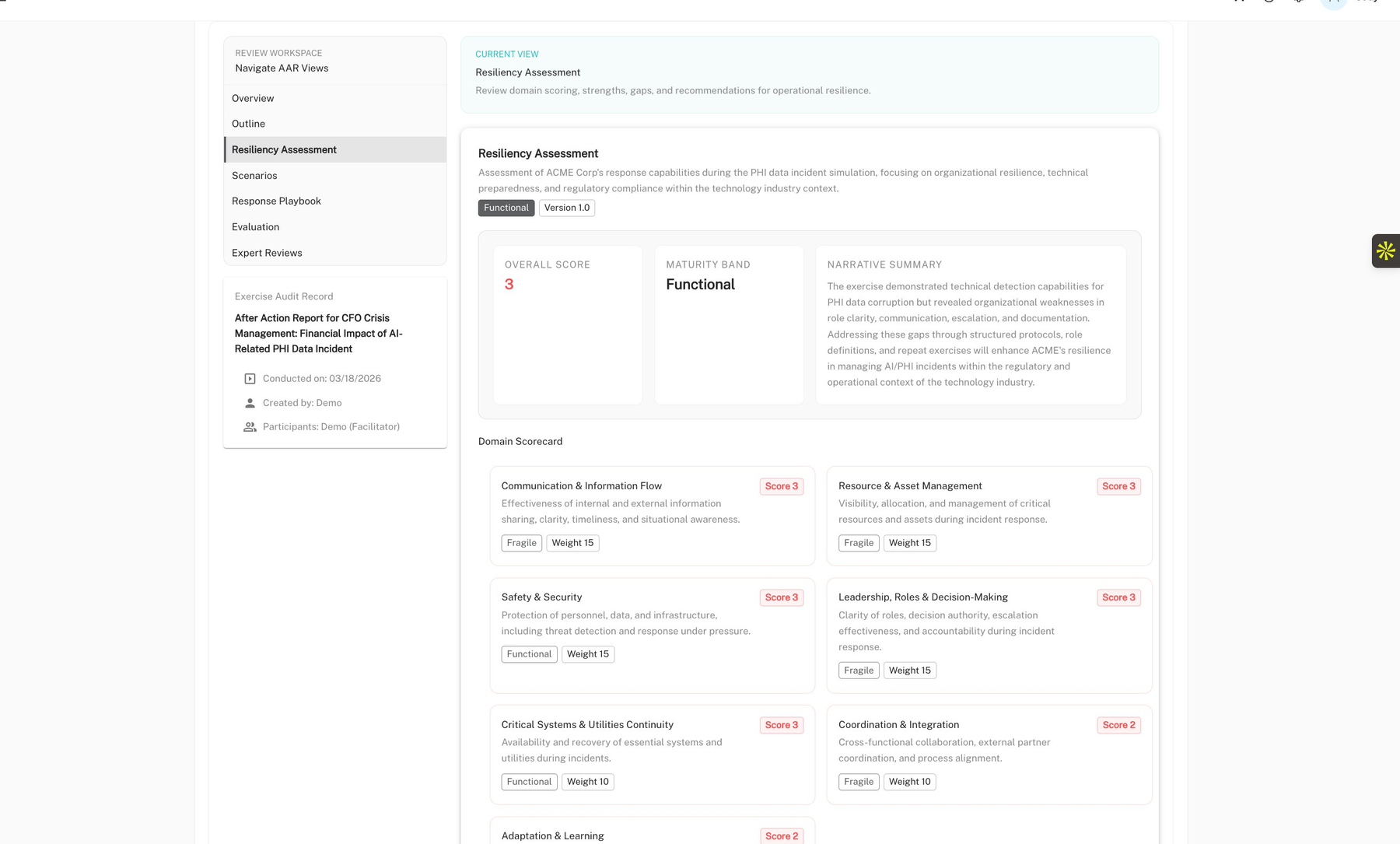
Every decision is timestamped, attributed, and scored against the playbook. Performance becomes measurable, not anecdotal.
Reports map directly to DORA, NERC CIP, CMMC, HIPAA 405(d), NIS2, and SEC cyber disclosure rules. Push straight into your GRC system of record.
Run exercises across business units, plants, care sites, branches, and program offices on a shared cadence. Local control, enterprise visibility.
AI-generated scenarios, pre-built role libraries, and automated AARs return capacity to the resilience team without expanding headcount.
Centralized scenario design and standardized after-action structure mean evidence rolls up cleanly across the organization.
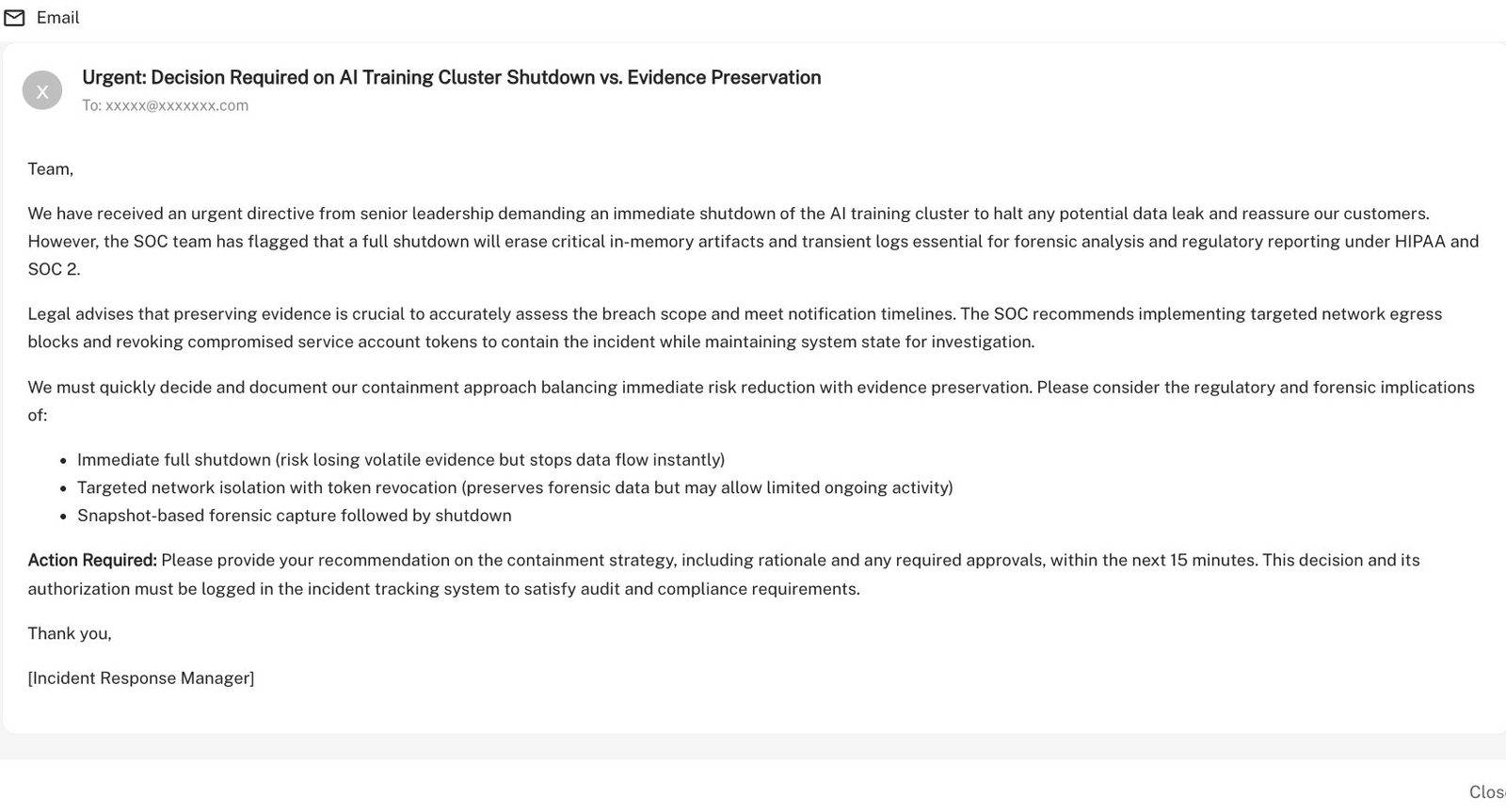
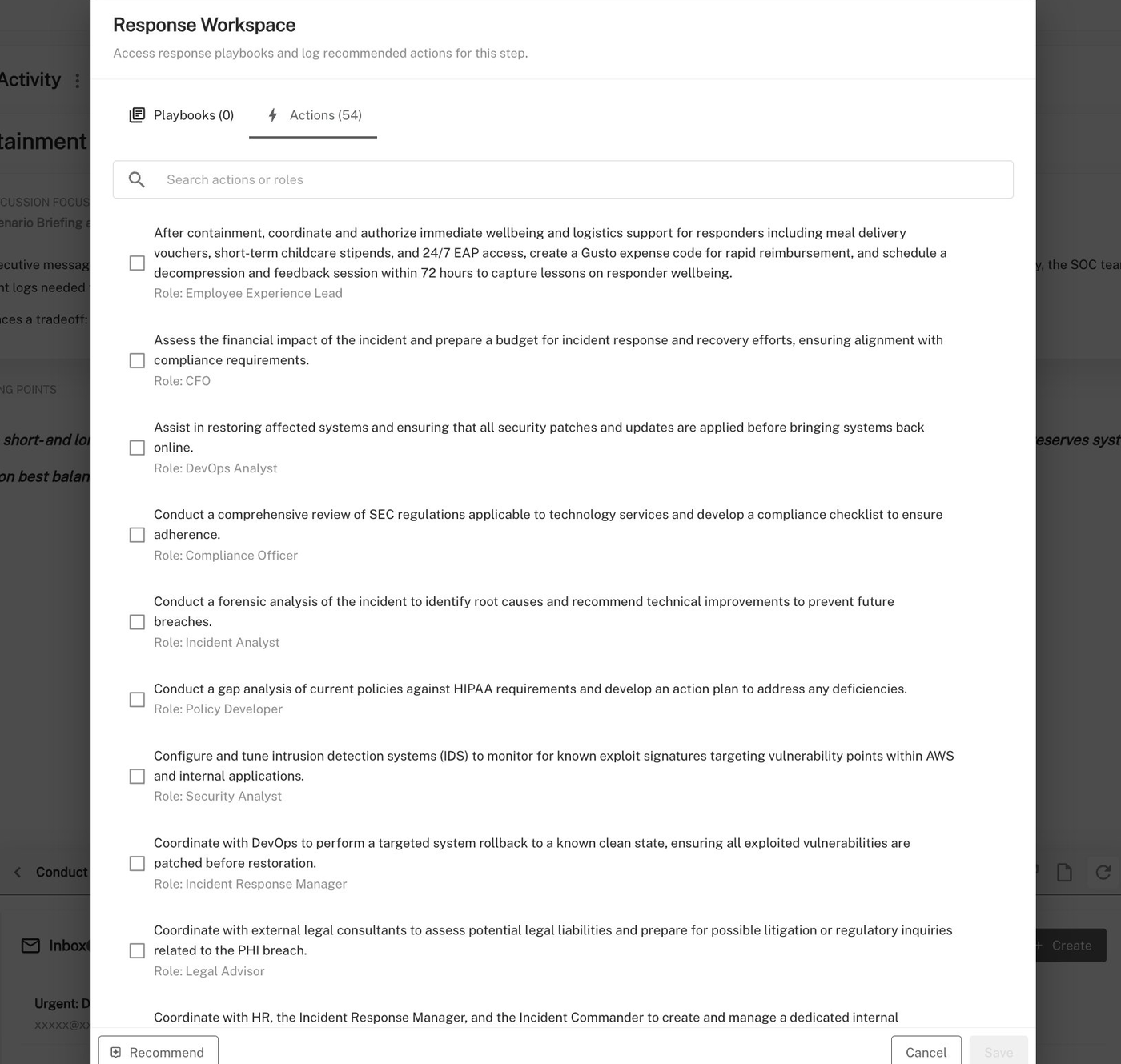
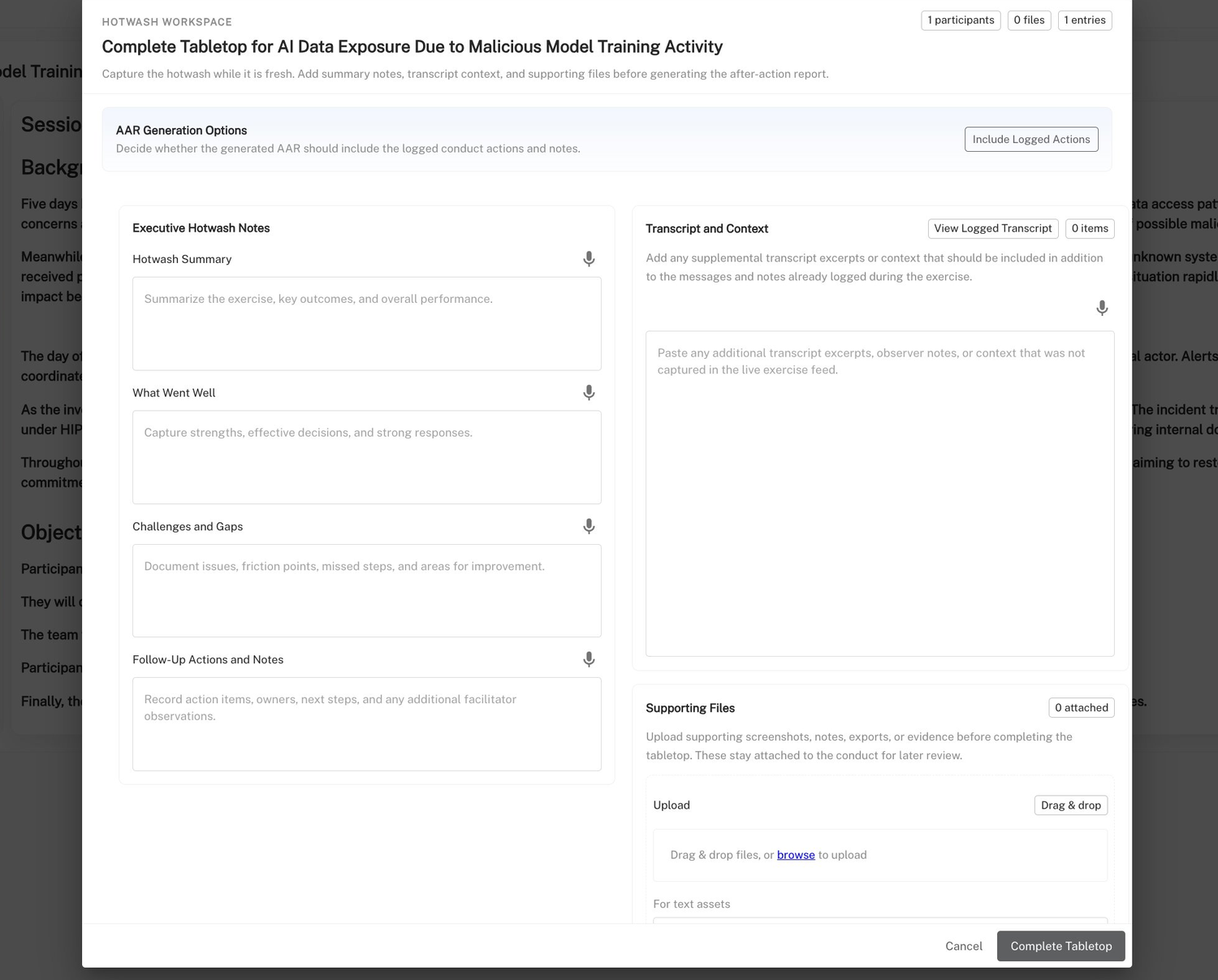
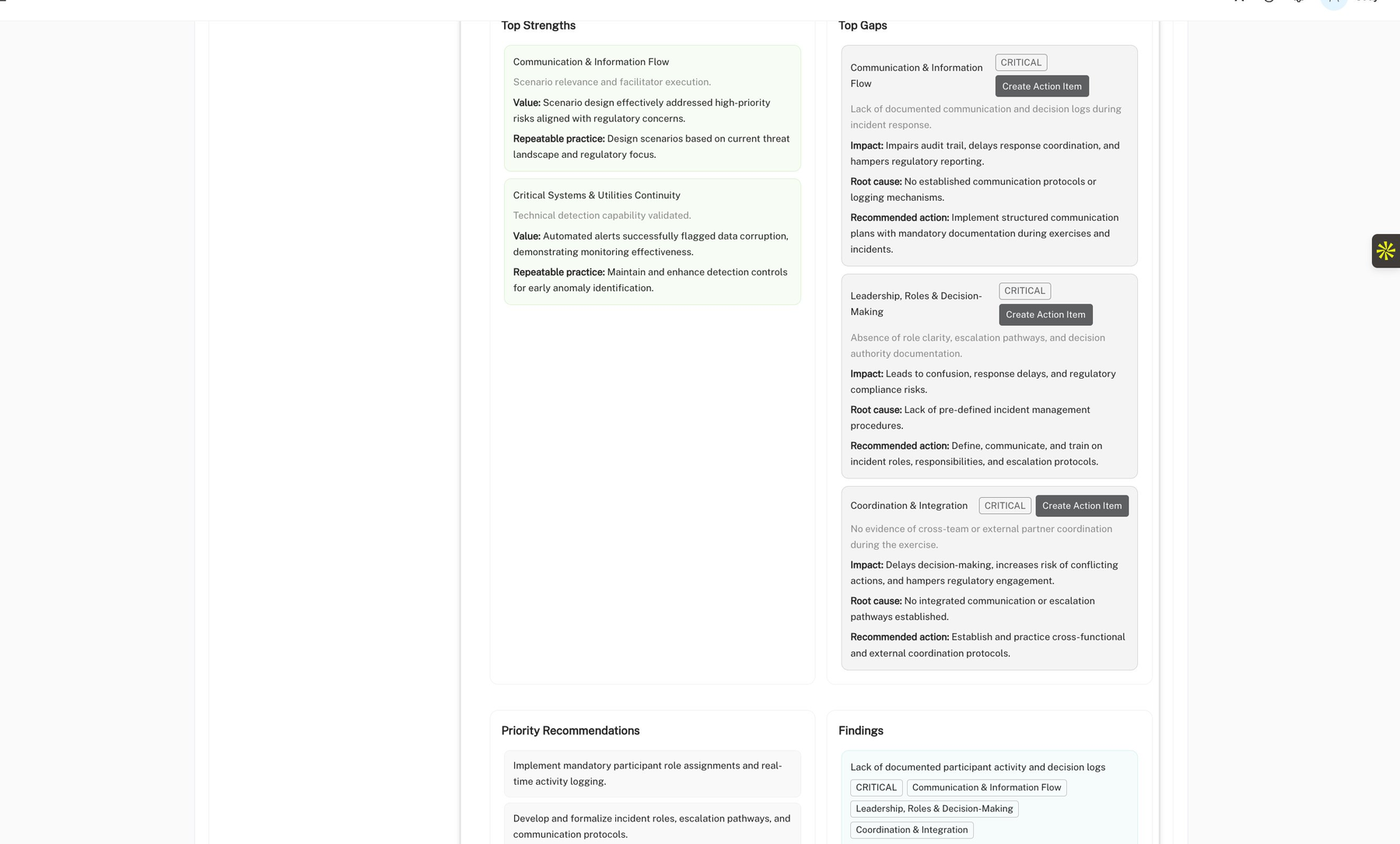
Opsbook synthesizes every decision, action, message, and inject into a complete after-action report the moment the exercise ends. Facilitators review, refine, and publish, then push evidence directly into the systems regulators and auditors examine, and back into the model that powers the next cycle.
Opsbook is an AI-powered operational readiness platform. It connects an organization's documents, playbooks, exercises, and after-action reports into one continuously improving intelligence layer, so preparedness gaps get identified, fixed, and verified over time instead of resetting after every exercise.
Tabletop exercise software runs isolated events. Opsbook treats exercises as one input into a continuous readiness cycle: every exercise, evaluation, and after-action report feeds a shared organizational intelligence layer that carries findings forward into the next cycle.
No. Opsbook's AI helps understand your organization, discover gaps, draft playbooks, and analyze outcomes, but every recommendation routes through human review and approval. Opsbook does not make containment or notification decisions on your behalf.
Before an incident, Opsbook identifies what should be tested and improved. During an incident, it assembles the right people, actions, decisions, and evidence into a coordinated response plan. Afterward, it learns from what happened and strengthens the next response, so each cycle leaves the organization more prepared than the last.
Most resilience programs run on static PDFs, outdated playbooks, tribal knowledge, and ad hoc coordination in Slack or Teams, with manual task assignment and weak evidence capture. Opsbook unifies all of it into one governed intelligence layer, so preparedness, response, and evidence live in a single connected system.
Answer a few questions about your exercise program, incident history, and compliance workload. Get an estimate of what moving to Opsbook could save you each year.
Calculate Your Savings →Opsbook plugs into the systems your team already trusts. Exercises, evidence, and remediation stay in one continuous record.


Schedule your demo today and discover the easiest way to ensure your organization stays ready, resilient, and responsive—before it counts.


